

 Hello Earth & Planetary Sciences Alumni,
Our alumni play an essential role in the success of EPS and, especially, in the opportunities we can provide for our students. Through mentoring, internships, professional connections, financial support, and speaking directly with our students about your work and career paths, you help them see the many directions an EPS education can lead. Alumni support also helps make meaningful research experiences possible, experiences that often shape careers and open doors to graduate school, industry, government, education, and other fields. Your continued involvement directly strengthens the education we offer and helps prepare the next generation of Earth and planetary scientists.

As I write this, our department is entering one of the most exciting periods in its history. In this issue, we recognize two longtime faculty members who have recently retired, Marie-Pierre Aubry and Jim Browning, and celebrate their remarkable careers and contributions to EPS. Over the next several years, additional long-serving faculty members will retire while outstanding new faculty join the department. These transitions are always bittersweet, but they also offer a rare opportunity to reimagine how we educate students and conduct research over the coming decades.

One of the greatest strengths of Earth and Planetary Sciences is that our discipline has always been collaborative. Understanding our planet requires physics, chemistry, biology, mathematics, and engineering—but it also requires something unique that EPS brings: the perspectives of deep time and deep space. By asking how Earth and planetary systems evolved over billions of years, we gain a richer understanding of how we arrived at the world we inhabit today.
That philosophy is shaping the future of our department. We are working closely with colleagues in Physics & Astronomy and Chemistry & Chemical Biology to develop new courses and expand research opportunities that prepare students to think across traditional disciplinary boundaries. Increasingly, the scientific questions our graduates will face demand expertise that no single discipline can provide.

We are also beginning to explore relationships across the university with programs in public policy, economics, and business. Whether the challenge is meeting future energy needs, securing supplies of critical minerals, preparing communities for natural hazards, or adapting to a changing climate, tomorrow’s leaders must understand not only the science but also the economic, policy, and societal dimensions of these issues. We want our students and students from these partner disciplines to appreciate the full picture.
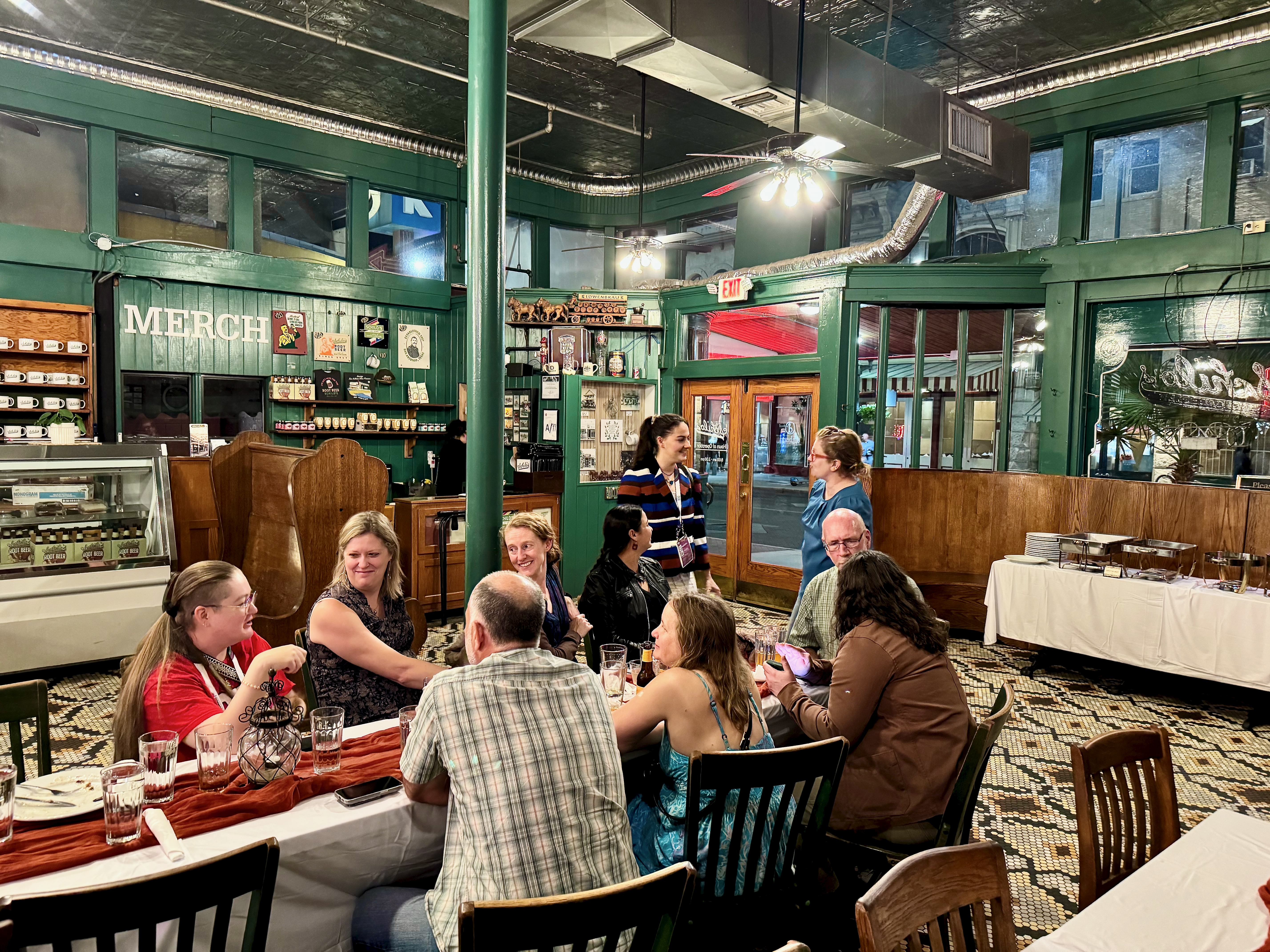
I also hope many of you will join us for our alumni gathering at the Geological Society of America meeting on Monday, October 12, at 7:00 p.m. Our event will be held at Yard House, located at 1555 Court Place, next to the Sheraton. In discussing the event, the manager asked how things were “on the banks of the Raritan”—he and his wife are both Rutgers alumni. These gatherings are always a wonderful opportunity to reconnect with old friends, meet current faculty and students, and hear what is happening in EPS.
Thank you for remaining part of the Rutgers Earth & Planetary Sciences community. I hope you enjoy this issue of The Redbeds, and I look forward to staying connected with you in the coming year.
Best regards,
Jim Wright
Chair, Department of Earth & Planetary Sciences
Rutgers University